The Evolution of Affiliate Networks in Driving Mobile Casino Innovations
Written by Yves Hughes · Nov 7, 2026
The Evolution of Affiliate Networks in Driving Mobile Casino Innovations
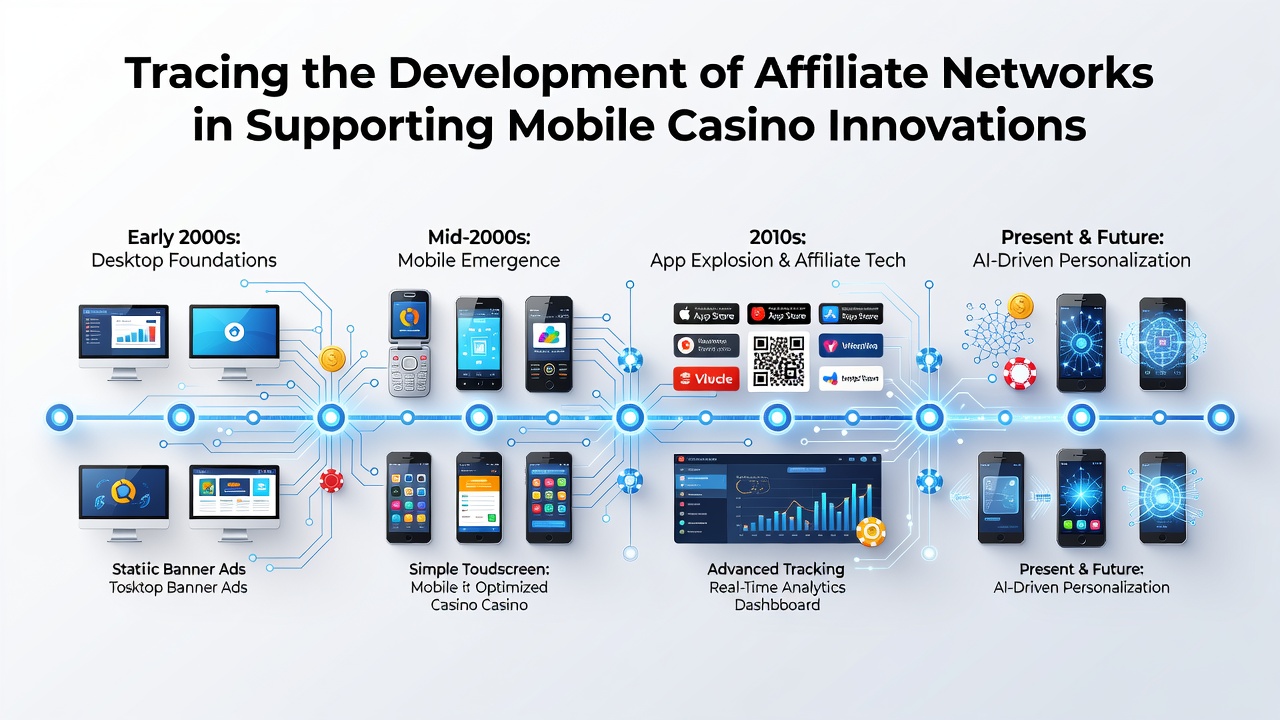
Affiliate networks began forming in the late 1990s alongside the first online casinos, and they established commission-based systems that rewarded marketers for directing players to gambling platforms while operators focused on game development and site maintenance. These early networks operated primarily through desktop websites and banner ads, yet they laid groundwork for tracking technologies that later supported mobile transitions. Data from industry analyses shows that by the mid-2000s, affiliate partnerships accounted for a substantial share of player acquisitions in European markets, with networks refining cookie-based tracking to measure conversions more accurately.
Initial Expansion and Technological Shifts
Smartphone adoption accelerated after 2007, which prompted affiliate networks to adapt their strategies toward mobile-optimized landing pages and app referrals, and this shift coincided with casino operators introducing touch-friendly interfaces that simplified gameplay on smaller screens. Researchers at various institutions documented how networks incorporated GPS data and device-specific analytics to target users in regions with growing mobile penetration, while operators responded by developing instant-play versions that required no downloads. According to reports from the International Association of Gaming Regulators, mobile gambling revenues in select jurisdictions rose steadily through the 2010s as affiliate-driven traffic increased.
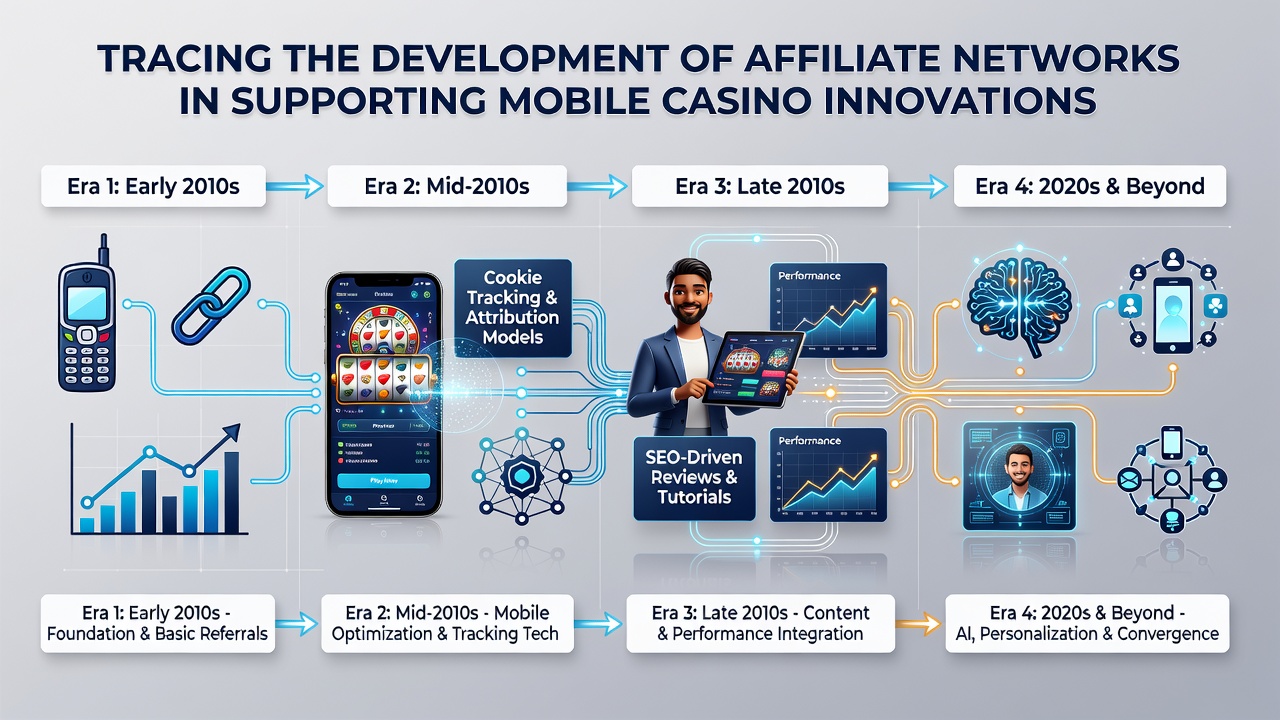
Networks introduced multi-platform tracking tools during this period, allowing affiliates to earn commissions from players who switched between desktop and mobile sessions, and this flexibility helped sustain revenue streams even as user habits changed. Observers note that early mobile innovations, such as simplified deposit methods via carrier billing, often appeared first on sites promoted through affiliate channels because networks provided real-time feedback on user preferences. Those who studied these developments found that networks in North America and Asia expanded faster than in other areas due to varying regulatory environments that favored digital marketing partnerships.
Integration of Advanced Features and Data Analytics
By the early 2020s, affiliate networks began integrating artificial intelligence for player segmentation, which enabled more precise promotions of mobile casino features like live dealer streams and progressive jackpot trackers accessible via apps. This integration occurred alongside broader industry moves toward responsible gaming tools, with networks incorporating age-verification links and self-exclusion options into their referral processes. Figures from European regulatory bodies reveal that affiliate traffic contributed to over half of new mobile registrations in several markets, although exact percentages varied by operator size and regional rules.
Networks also supported innovations in payment processing by partnering with providers of instant mobile wallets and cryptocurrency options, and these collaborations reduced friction for users who accessed casinos through affiliate links. Studies from academic sources indicate that such payment enhancements, when promoted via targeted campaigns, led to higher retention rates among mobile players compared to organic traffic alone. In November 2026, upcoming industry forums plan to examine how affiliate data analytics might further influence next-generation mobile features, including augmented reality table games and personalized bonus structures based on device usage patterns.
Regulatory Influences and Global Variations
Regulatory frameworks shaped affiliate activities differently across regions, with Canadian provinces establishing clear guidelines for online promotions that encouraged networks to develop compliant mobile marketing campaigns. Meanwhile, Australian oversight bodies emphasized transparency in commission structures, prompting networks to disclose terms more openly to both affiliates and operators. These variations created opportunities for networks to specialize in certain markets, and data compiled by research organizations shows corresponding differences in mobile innovation adoption rates tied to affiliate activity levels.
Affiliates themselves adopted new content formats during the mobile era, moving from static reviews to video tutorials and push notifications that highlighted app-specific casino tools. This evolution supported operators in rolling out features such as biometric login options and real-time tournament notifications, since networks supplied performance metrics that guided development priorities. Those who've examined cross-border operations note that networks maintained separate tracking systems to comply with local data protection standards while still delivering unified reporting to casino partners.
Conclusion
Affiliate networks have progressed from basic referral systems to sophisticated partners in mobile casino innovation, incorporating analytics, regulatory compliance, and multi-device tracking that directly influenced feature development. Industry reports continue to track these contributions through metrics on player acquisition and retention, while future developments in 2026 and beyond may further align network capabilities with emerging mobile technologies. The ongoing relationship between networks and operators demonstrates how commission models have adapted to support technological progress without direct involvement in game creation or platform operation.